
Get Off the Block
The most coached spot in basketball is the wrong one

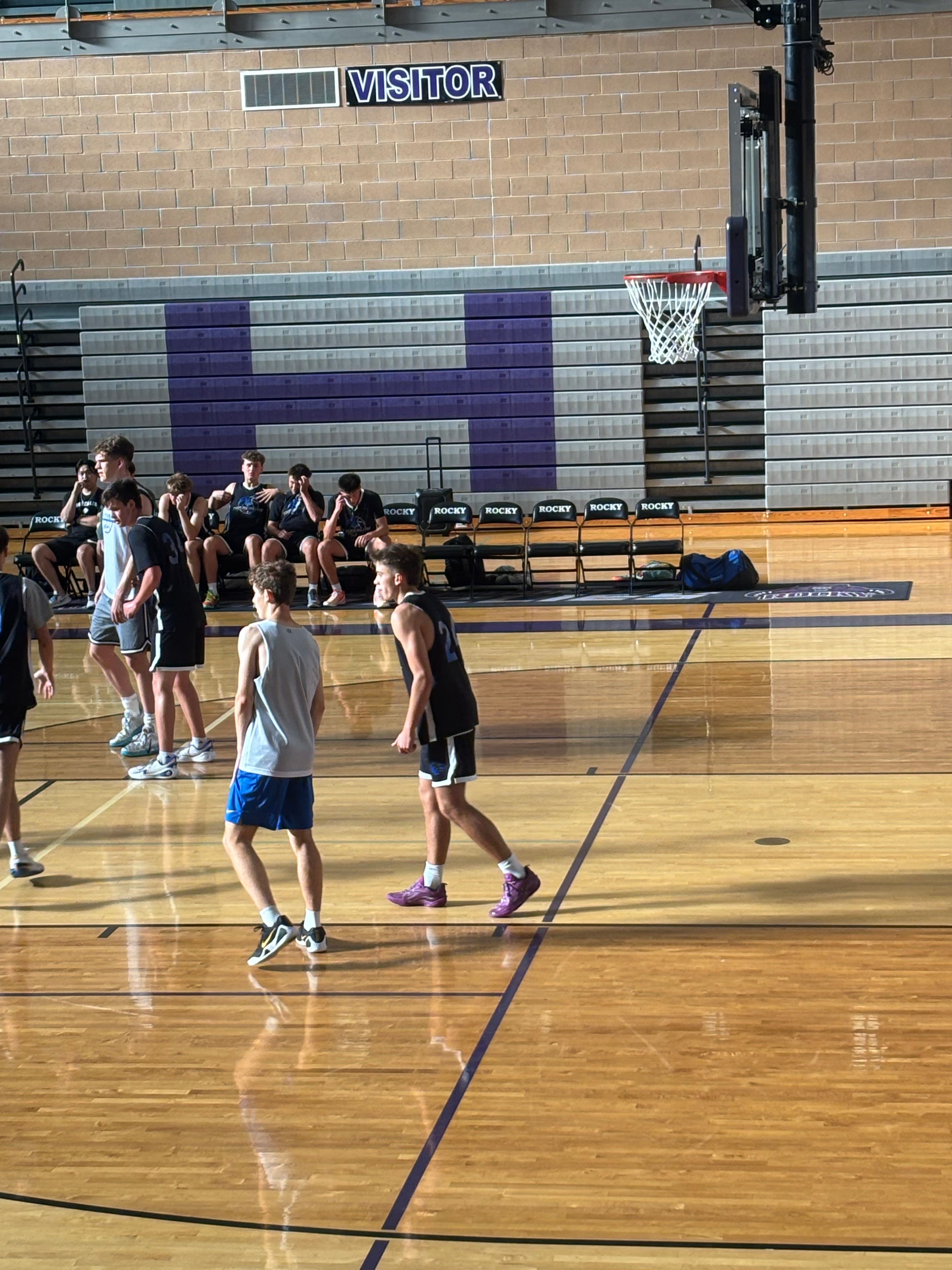
I am in the stands at Rocky Mountain High School in Meridian, day two of the three day Idaho Shootout, Route 44 dirty Diet Coke in hand. Something was missing, and I am a little embarrassed it took me this long to see it.
No block.
The lane was painted clean. Free throw line, lane lines, the hash marks running up the side. But the solid block down by the baseline, the one every post player has been trained to hunt for, was not there.
My first thought was that somebody forgot it. My second thought was that somebody got it right.
Here is what the block was built to do. It is a place to stand during a free throw. A dead ball reference so ten players know where to line up and the official knows who is legal. That is the whole job. An alignment mark for a stopped clock.
Somewhere along the way it became a post up landmark. “Get to the block.” We say it without thinking. And the player does exactly what we ask. They go find the block, they stand on it, and now they are too low.
Watch it happen. A player anchors to the block and ends up even with it or below it, almost on the baseline, pinned under the rim with no angle. The only finish left is a reverse or a prayer. The defender barely has to work. The floor already pushed the player into a bad spot.
The position you actually want is higher. Between the first and second hash. Up there you have a live angle to the rim, room to finish over either shoulder, and a passing window that has not closed. Same lane, a couple feet higher, completely different decision making.
So why do players keep going to the block.
Because it pulls. A painted block sits right under their feet and quietly tells them where to stand. The angle to the rim, the defender’s top foot, the open window, those matter more, but they take attention to find. The block takes none. It does its work whether anyone is looking or not.
I would know. I watched three or four games on this floor yesterday and never saw that the block was gone. It took me until this morning. That is how quietly it works. It does not shout. It pulls. And a player in the lane gets pulled to it before they have decided anything.
That is what a cue does. A cue is a constraint with the training wheels still on. “Get to the block” hands the player a fixed spot and tells them the answer is painted on the floor. It is not. The answer moves every possession. It depends on the defender, the pass, the angle, the help. You cannot paint that.
Which is why the missing block on that visitors floor is not a mistake. It is a better place to learn. Take the block away and the player has to find the spot. They have to feel where the angle opens up instead of running to the place the paint told them to stand. That is the rep that transfers, because in a real game nobody painted the right spot for them.
I am not going to stand a player on a block and call it teaching. I would rather take the block away and help them find the place where the finish is already there.
The good spot was never painted. It was always something you feel.
“It does not shout. It pulls.”
Love that line.